
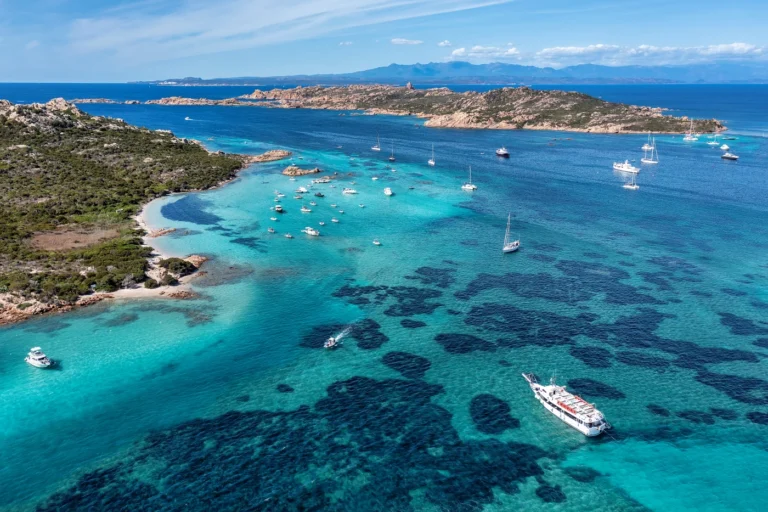
Visiting the Maddalena Archipelago It means stepping into one of Sardinia’s most beautiful seascapes: a collection of islands, coves, granite rocks, crystal-clear sea and white sandy beaches that seem to change colour with every hour of the day. From La Maddalena, Caprera, Budelli and Santo Stefano to the other islands, each beach reveals a different facet of this stretch of the Mediterranean.
This article is intended for anyone who wants to understand What to see, how to get there, when to book, which beaches to choose, and whether it’s better to travel by land or by sea. It’s a comprehensive guide to organising a trip, a day out or an excursion to the archipelago, with practical advice on ferries, boat tours, Cala Coticcio, Spiaggia Rosa, Cala Corsara and the main sights to see.
What should you know before visiting the Maddalena archipelago?
The Maddalena Archipelago is situated in the north of Sardinia, off the coast of Gallura, and is famous for its beaches, its wind-sculpted granite and crystal-clear waters that make every cove special. The area is protected by the Maddalena Archipelago National Park, established to protect a unique natural heritage comprising the sea, islands, seabeds and sensitive habitats.
When we talk about La Maddalena, we are not referring just to a single town, but to a group comprising a main island and several islets. The island of La Maddalena is the main settlement, whilst Caprera is connected by land via a bridge. Budelli, Spargi, Razzoli, Santa Maria and Santo Stefano complete a mosaic of landscapes that attracts travellers, hikers, photographers and lovers of the sea.
Before you set off, it is important to be aware that certain parts of the archipelago are subject to specific rules. During the high season, it is advisable to book excursions, ferries and activities in advance, especially if you wish to visit the most popular islands or go on a boat trip in the most picturesque areas.
How do you get to La Maddalena from Palau by ferry?
The most common way to reach La Maddalena is to set off from Palau, a town on the Gallura coast that is well connected to Olbia and the main roads of northern Sardinia. Ferries depart from here for the port of La Maddalena, with frequent services throughout the day. The crossing is short, allowing you to reach the island quickly, even with a car, motorbike or scooter.
Ferries are the most practical option for those wishing to visit the island of La Maddalena at their own pace, exploring the beaches, the historic centre and scenic viewpoints. La Maddalena is connected to Palau all year round, but timetables, frequencies and availability may vary depending on the season. For this reason, during the summer months it is advisable to check the latest timetables and book in advance where possible.
Visitors arriving from Olbia can reach Palau by car or using local transport services. Once you’ve disembarked, you’ll find yourself near the town of La Maddalena, the perfect place to start your visit, have a coffee, stroll along the seafront or organise a boat trip to the other islands of the Maddalena archipelago.
What is there to see in the town of La Maddalena and its historic centre?
The town of La Maddalena is the inhabited heart of the archipelago. Its historic centre is a delight to explore on foot, with its narrow streets, small squares, shops, bars and views of the harbour. Whether before or after a day at the beach, it’s well worth spending some time in this part of the island, as it offers a glimpse into the daily life of the area beyond the seaside atmosphere.
Among the things to see is the Church of St Mary Magdalene, linked to the island’s religious and community history. The town centre also offers restaurants, ice-cream parlours, shops and information points that are useful for organising excursions to La Maddalena, hiring transport or finding out which beaches are best suited to the prevailing wind conditions.
Visiting the island without stopping off in the town centre would be a mistake. Its natural beauty is the main reason for the trip, but the urban aspect helps you to better understand the local identity. On the island of La Maddalena, life by the sea, military history, local traditions and slow tourism all coexist.
Which is the most beautiful beach in the Maddalena archipelago?
To determine what the the most beautiful beach of the archipelago is difficult, because every beach has its own distinct character. Some are famous for their light-coloured sand, others for their shallow waters, and others still for their cliffs and the contrast between the pink granite and the crystal-clear sea. The beaches of the Maddalena archipelago are among the most photographed in Sardinia precisely because of this variety.
Many travellers cite Cala Corsara, Cala Coticcio and the Spiaggia Rosa as some of the most iconic spots. Cala Corsara, on the island of Spargi, is loved for its vibrant colours and dramatic rock formations. Cala Coticcio, on Caprera, is a cove renowned for its clear waters and unspoilt, wild appearance. The Spiaggia Rosa on Budelli, on the other hand, is an absolute icon, but must be admired whilst respecting the conservation restrictions.
The choice depends on the kind of experience you’re looking for. Those seeking convenience may prefer a beach that can be reached by land. Those looking for more exclusive views may opt for a boat trip. Photography enthusiasts should take into account the time of day and the light, as the colours in the Maddalena archipelago change rapidly throughout the day.
Caprera: what’s worth seeing between Garibaldi, Cala Coticcio and the natural surroundings?
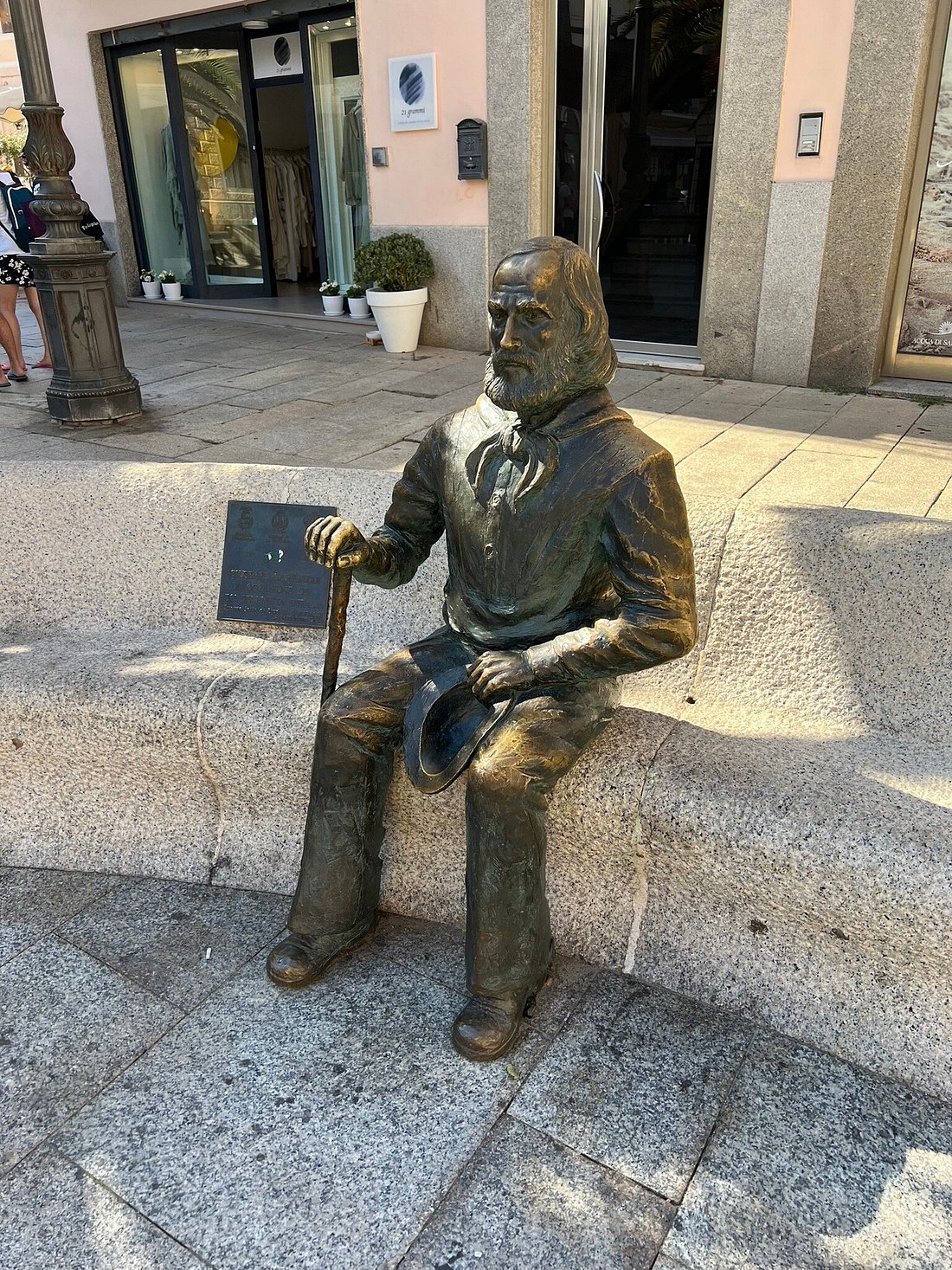
Caprera is one of the must-see destinations for anyone visiting the archipelago. Connected to La Maddalena by a bridge, it is easily accessible by land and offers a unique blend of history, nature and beaches. Here lies the legacy of Giuseppe Garibaldi, who spent the final years of his life on the island. A visit to Garibaldi’s house adds cultural depth to a coastal itinerary.
Caprera is also famous for Cala Coticcio, often referred to as “Tahiti” because of the colour of the water. This cove is one of the most sought-after beaches, but access may be restricted for environmental reasons. Before planning your visit, it is therefore important to check the latest information, book any authorised guides if necessary, and follow the national park’s guidelines.
As well as Cala Coticcio, Caprera offers footpaths, pine forests, rocky coves and scenic viewpoints. Maddalena and Caprera together make for a perfect itinerary for those who want to combine the sea, walking and history. For many travellers, Caprera is the best way to experience a wilder, more authentic side of the archipelago.
Budelli and Spiaggia Rosa: why are they symbols of the archipelago?
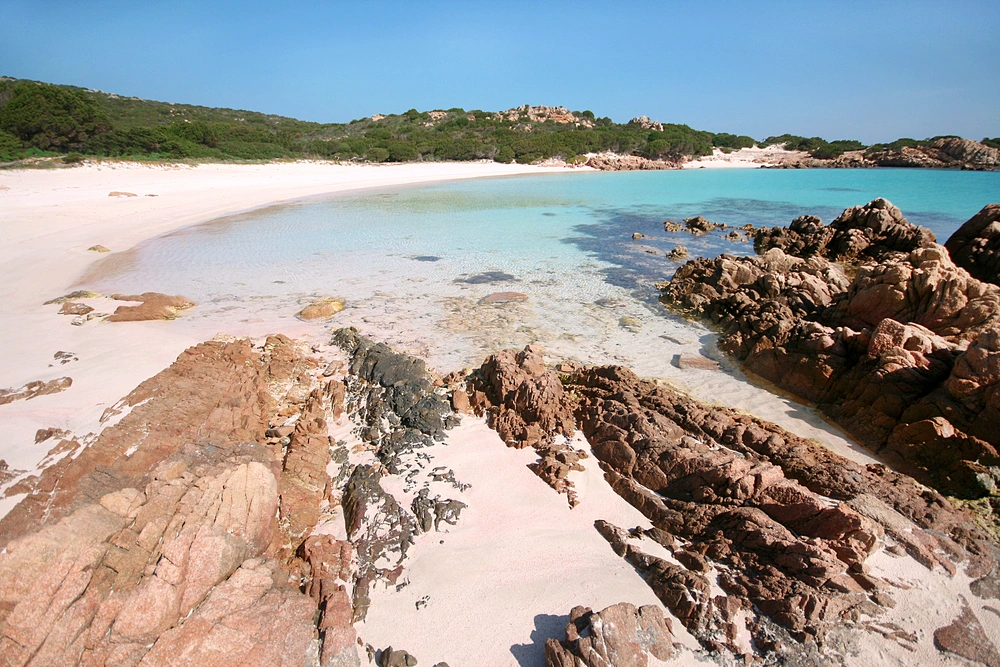
Budelli is one of the most famous islands in the Maddalena archipelago thanks to its Pink Beach. The sand’s distinctive colour, which comes from natural fragments of marine organisms, has made this place famous throughout the world. Precisely because of its fragility, however, this beach should not be treated like any other: it is an environment to be protected, observed and respected.
Today, Spiaggia Rosa is subject to strict restrictions, and this should be borne in mind before organising a trip there. It is not always possible to get close to the beach or stop there as you would at other beaches, because the priority is to preserve the site. Budelli’s value lies not only in its iconic image, but in the realisation that some wonders must be left untouched.
A boat tour allows you to admire Budelli and the surrounding waters whilst complying with the relevant regulations. This way, you can enjoy the island’s beauty without causing any damage. Visiting the islands with expert guides also helps you to understand the natural history of the Maddalena National Park and the importance of conservation.
A boat trip or a cruise: what’s the best way to visit the islands?
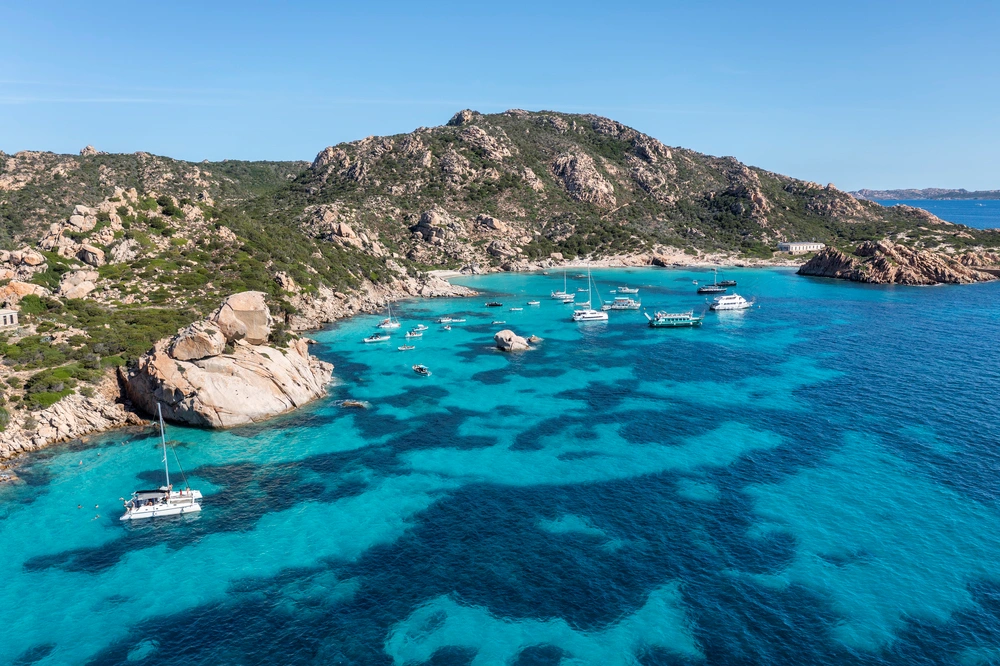
A’boat excursion It is often the best way to explore the archipelago, especially if you are short on time. Travelling by sea allows you to reach coves, islets and stretches of coastline that would be inaccessible by land. Indeed, some beaches can only be reached by sea, or at least more easily by boat.
A boat trip It may include stops at Spargi, Budelli, Santa Maria, Razzoli and other scenic spots. A sailing boat is ideal for those looking for a leisurely and peaceful experience, whilst a skippered boat in La Maddalena may be more convenient for those who want to relax without having to worry about the route. Anyone looking for a boat in La Maddalena should also compare itineraries, duration, number of passengers and stopover policies.
Before booking, it’s worth asking what the excursion includes, which beaches will be visited and whether the itinerary might change depending on the wind. A reputable tour operator always adheres to the park’s rules and does not promise access to places that are impossible to reach. In the archipelago, the sea plays a major role: flexibility and respect are part of the experience.
Cala Corsara, Santo Stefano and other islands in the Maddalena archipelago: what’s worth seeing?
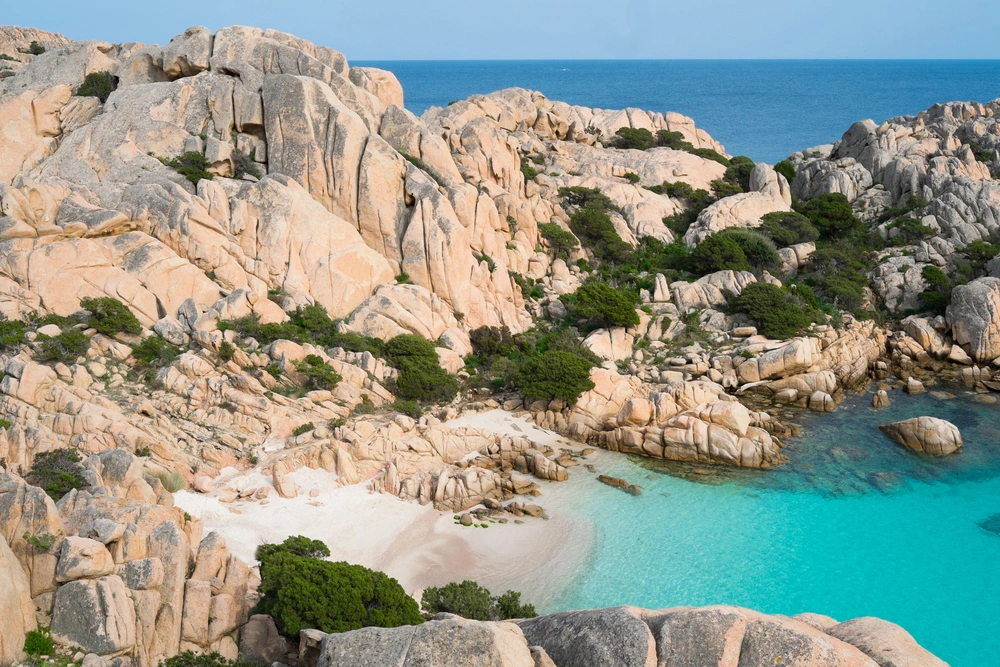
Cala Corsara is one of the most famous beaches in the La Maddalena archipelago. It is situated at Spargi and is renowned for the contrast between its pale sand, crystal-clear water and large granite boulders. Every corner seems to have been sculpted by the wind, and the beach offers one of the archipelago’s most iconic landscapes.
Santo Stefano is another important island, visible between Palau and La Maddalena. Although it is less commonly associated with a typical day at the beach than Spargi or Budelli, it plays a significant role in the geography and history of the archipelago. The other islands complete the picture: some can only be visited on organised excursions, others are more strictly protected, whilst others are best admired from the sea.
The islands of the La Maddalena archipelago offer a wide variety of scenery: hidden coves, rocky stretches, crystal-clear waters and white sandy beaches. For this reason, when talking about exploring the La Maddalena archipelago, one should not think of just one place, but rather a range of different experiences.
Which beaches on the island of La Maddalena can be reached by land?
Not all the island’s wonders require a boat. On the island of La Maddalena, there are beaches accessible by land, perfect for those who prefer to get about independently. Among these, Lower Trinity It is one of the best-known: Bassa Trinità beach boasts fine white sand, crystal-clear water and a setting that is ideal for anyone wishing to spend a few hours by the sea without having to organise a boat trip.
Other beaches on the island can be reached by car, scooter or bike, depending on the season and conditions. A beach accessible by land is convenient for families, travellers on a tight schedule or those who prefer to avoid organised tours. However, even in these cases, it’s best to arrive early, especially during the summer months.
Sticking to just the most famous beaches on the island can be a bit limiting. My advice is to explore at a leisurely pace, choosing your beach based on the wind and its aspect. In a single day, you can alternate between quieter coves, scenic stretches of coastline and a stroll through the town centre.
When should you book excursions to La Maddalena, and what should you bear in mind?
In summer, it is advisable to book Book ferries, excursions to La Maddalena and the most popular tours in advance. This is particularly important for those travelling in August, at weekends or on the busiest days. Booking in advance doesn’t mean sacrificing spontaneity; it ensures you secure a place on the best activities and reduces the risk of having to change your plans at the last minute.
When choosing an excursion, consider the duration, itinerary, maximum number of people, type of boat, planned stops and the operator’s commitment to sustainability. The Maddalena islands accessible via organised tours may vary depending on sea conditions and the park’s regulations. A reliable operator will always explain what is permitted and what is not.
Those looking for regular connections may also wish to find out about services such as Maddalena Lines or other operators on the Palau–La Maddalena route. When it comes to excursions, however, it is worth distinguishing between simple transfers, day trips, chartered boats with a skipper and sailing trips.
Exploring the archipelago by sea or by land: which experience should you choose?
Exploring the archipelago by land allows you to get to know the main island and Caprera better. It’s the ideal choice for those who want to set their own pace, stop off at the beach, visit Garibaldi’s house, explore the historic centre and reach scenic viewpoints without being tied to a fixed itinerary.
Visiting Maddalena by sea, on the other hand, allows you to discover the archipelago’s most iconic side. The waters between Budelli, Spargi and Santa Maria offer colours that are hard to forget, and many coves can only be reached by boat. A beach accessible only by sea often has a special charm, precisely because it is set apart from the more common routes.
The best option, if you have at least two days, is to combine both experiences. You could spend one day exploring La Maddalena and Caprera by land, and another on a boat trip. That way, you can visit different places and really get a feel for the complexity of the archipelago.
Why is the La Maddalena archipelago one of Sardinia’s most beautiful destinations?
L’archipelago of La Maddalena It is a special destination because it combines accessibility with a sense of seclusion. It is easy to reach from Palau, but as soon as you look out to sea, you feel how far removed you are from everyday life. Granite, wind, crystal-clear water and Mediterranean light create a landscape that is unadorned, powerful and unforgettable.
The Archipelago National Park It protects a fragile environment, where tourism and conservation must coexist. This means that travellers have a responsibility: to choose operators who respect the environment, not to leave rubbish behind, not to take sand, not to disturb the flora and fauna, to stay on the paths and to accept any restrictions.
The charm of the La Maddalena archipelago lies precisely in this balance. It is not just a picture-postcard destination, but a place where you can learn to look at the sea more closely. Those who come for the beach often leave with memories of an entire landscape.
Summary: What should you bear in mind before visiting the Maddalena Archipelago?
- Magdalena It’s easy to get there from Palau by ferry, even if you’re taking a car or scooter with you.
- The Maddalena Archipelago forms part of a national park, and many areas are protected by specific regulations.
- Caprera is connected to La Maddalena by land and is ideal for its history, nature, Garibaldi and Cala Coticcio.
- Budelli is famous for the Spiaggia Rosa, which should be visited in accordance with the relevant conservation regulations.
- Cala Corsara is one of the most picturesque beaches and is often included in boat tours.
- A boat trip is the best way to explore the most remote islands and the coves that can only be reached by sea.
- Bassa Trinità and other beaches on the island of La Maddalena are easily accessible for those who prefer to travel by land.
- During the high season, it’s best to book ferries, boat trips and activities in advance.
- For the full experience, alternate a day travelling overland between Maddalena and Caprera with a day travelling by sea.
- Always respect the environment: the archipelago is beautiful precisely because it is fragile and protected.