
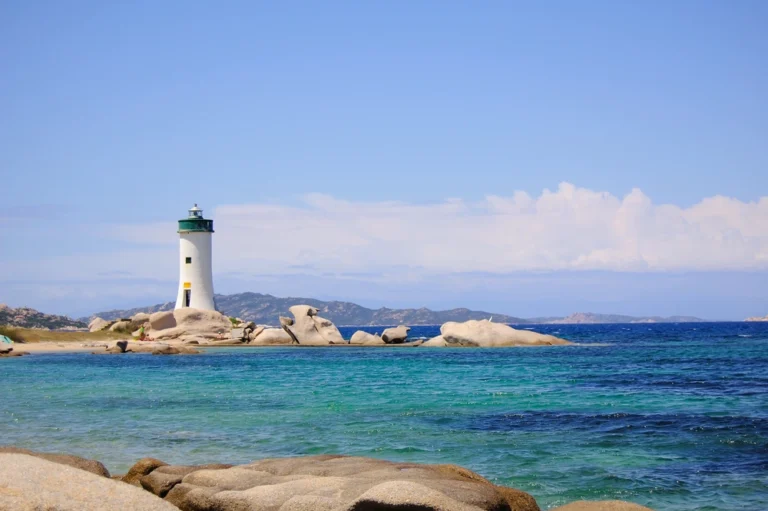
Palau, Sardinia: the gateway to La Maddalena
Read this if: Are you planning a holiday in Sardinia and you’ve only ever heard of Palau as “the place you set off from for La Maddalena”. Well, stop for a moment. Palau isn’t just a seaside stopover. It’s one of those places you don’t expect: picture-perfect beaches, a lively town centre, a wild coastline, and a strategic location that few other towns can boast. Here, I’ll tell you all about it: where it is, what to do, where to stay, where to eat, and why you should consider it as a base for your Summer in Sardinia 2026 instead of just rushing past it.
Where is Palau? And why have I never thought of it before?
Palau is located on the the north-eastern coast of Sardinia, in the Gallura, just a few kilometres from Olbia (about a 40-minute drive) and right opposite the’La Maddalena Archipelago. It is literally the closest point to the archipelago: the stretch of sea separating it from the island of La Maddalena is called Asinelli Pass and is only a couple of kilometres wide.
If you're arriving by plane, you'll land at Olbia (Costa Smeralda Airport). From there, take the SS125 northwards, passing through Arzachena, and in half an hour you’re in Palau. Simple.
Why haven’t you ever considered it? Probably because everyone’s talking about Costa Smeralda, Porto Cervo, Baia Sardinia. Palau is quieter and less glossy, but its sea is every bit as good as that of its more famous neighbours. In fact, in some ways, it’s even more authentic.
What is there to do in Palau? Beaches, hiking, excursions and much more
The right question isn’t “what to do in Palau” but “how many days do I need to do it all?”. Because there’s so much to do.
The beaches of Palau: not just “the one in front of the harbour”
Let’s start with beaches. Palau has a rugged coastline, with coves hidden and sandy beaches that will make you forget the most famous sights.
Porto Faro Beach: probably the most beautiful in the area. White sand, crystal-clear water, with consistent winds (as it’s exposed to the mistral). It’s a popular spot for windsurfing and kitesurfing, but it’s also spectacular simply for a swim. Please note: the wind can be strong, so if you’re looking for a relaxing day by the lake, this isn’t the place for you.
Talmone Beach: small and sheltered, with an old military fort overlooking it. It can be reached via a short descent from the road. Background sandy and mixed with rocks, ideal for go snorkelling.
Sciumara Beach: the largest, with light-coloured sand and shallow water for several metres. Perfect for families with children.
La Sciumara: Please note, there is also “La Sciumara” (without the article), which is another cove not far away. Local names can sometimes be confusing, but the great thing is that you can drive from one to the other in ten minutes.
Cala Capra Beach: accessible only by sea or after a short hiking. If you have a dinghy, don’t miss it. If you don’t, you can still get there on foot via a path that starts from the road to Porto Faro.
Boat trips in La Maddalena (and why Palau is the best starting point)
Palau is the ideal base for a’excursion in the Archipelago of La Maddalena. Ferries depart every half hour (Compagnia delle Isole, Delcomar) and in 15 minutes you’re at La Maddalena (the main island). But the real spectacle is the archipelago: Caprera, Spargi, Budelli, Saint Stephen, Razzoli.
You can:
Take the ferry as a pedestrian and then, once you’re in La Maddalena, hop on a dinghy for a tour of the archipelago.
Or book a’excursion which departs from Palau (there are loads of them, with departure from the marina).
The advantage of setting off from Palau is simple: you’re already there. You don’t have to get up at the crack of dawn to drive for two hours. You can have a leisurely breakfast, stroll down to the harbour, and board the boat. That’s the luxury of staying in Palau.
Hiking and nature: the trail to Capo d’Orso and the Valley of the Moon
Palau isn’t just about the sea. Just outside the town centre there is Capo d’Orso, a rock shaped like a bear (hence the name) which can be reached after a short uphill walk. The view from the top is amazing: the whole coastline stretching as far as La Maddalena.
Then there is the Valley of the Moon (or Valley of the Mills), a granite plateau shaped by the wind into strange and evocative forms. It really does look like a lunar landscape. It can be reached by car (via a dirt track, which requires careful driving) or with an hour’s walk from the town centre. It is one of those places where you take your camera and feel as though you’re on another planet.
If you enjoy walking, there are footpaths linking Palau to Porto Pollo (famous for windsurfing) and to Baragge, with a view of the archipelago.
What to see in the centre of Palau: the fort, the harbour, the narrow streets
The centre of Palau is small and lively, and you can explore it in an hour. Don’t miss:
Monte Altura Fort (or Forte Arbuticci): a 19th-century military fortress on the hill above Palau. It hosts exhibitions and events in the summer and is one of the best spots for watching the sunset.
Marina: full of bars, restaurants and ice-cream parlours. It’s the beating heart of summer life.
The narrow streets of the town centre: don’t expect a medieval village, but there is an authentic atmosphere, with little local shops and bottles of Cannonau wine on display outside the doorways.
Why visit Palau? Five good reasons
You're 15 minutes away from La Maddalena. Literally. You can have breakfast in Palau, lunch in the archipelago, and be back in time for dinner. No other place in Sardinia offers this advantage.
The beaches in Palau are beautiful and less crowded. Whilst everyone is crowding around Cala Brandinchi o La Pelosa, you can enjoy Porto Faro o Talmone with half the number of bathers.
It’s cheaper than the Costa Smeralda. Accommodation in Palau is generally cheaper than in Porto Cervo o Baia Sardinia. And the sea is just the same.
It’s the perfect base from which to explore the north-east. From Palau, you can reach the following places in 20–30 minutes: Costa Smeralda, Arzachena (and its archaeological sites), Santa Teresa Gallura (including the famous Pelosa beach), and of course La Maddalena.
It has a genuine atmosphere. It isn’t a place built for tourists. Palau is a town that’s alive all year round. You can feel it in the restaurants, in the shops, and in the way people talk to you.
Where to stay in Palau: hotels, B&Bs, holiday apartments and campsites
There’s a wide selection to suit all budgets.
Hotels and holiday apartments
Hotel Palau: Central location, harbour views, swimming pool, parking. Ideal if you want to be right in the heart of the town.
Residence Le Pavoncelle: Just a stone's throw from Sciumara beach, with fully equipped apartments. Ideal for families.
Hotel Piccolo Mondo: more affordable, family-run, clean and welcoming.
B&Bs and guesthouses
B&B La Terrazza: Simple rooms, but with a terrace overlooking the sea. Breakfast is homemade.
B&B Il Viaggiatore: near the harbour, perfect if you need to catch the ferry early in the morning.
Guesthouse in Lì: small and cosy, just a stone's throw from the centre.
Farm stays (for those seeking peace and nature)
Li Munti Farmhouse: Out of the city centre, in the hills. Stunning views, dinner featuring local produce, complete silence.
Lu Pastruccianu Farmhouse: closer to the sea, between Palau and Porto Pollo. Ideal for nature lovers who want to enjoy good food.
Campsites and holiday villages
Camping Village Baia Saracena: right by the sea, with a swimming pool, a restaurant and direct access to a cove. One of the most popular places to stay.
Camping La Liccia: Just outside Palau, well-equipped, with a swimming pool and entertainment.
Practical tip: for summer 2026, book Booking in advance is essential. Palau isn’t huge, and the best accommodation fills up months in advance, especially in July and August.
Where to eat in Palau: restaurants, pizzerias, street food
La Sardinian cuisine The food in Palau is excellent, with a focus on fresh fish (naturally) and Gallurese traditions.
Seafood restaurants
La Preferita Restaurant: One of the best in Palau. Fresh fish, fregola with clams, Catalan-style lobster. The prices aren’t exactly cheap, but it’s well worth it.
L’Approdo Restaurant: Overlooking the harbour, with sea views and quick service. The seafood starters and sashimi are excellent.
Trattoria da Antonella: A more relaxed atmosphere, home-style cooking, generous portions. This is the place to come for a good meal without any frills.
Pizzerias
La Focaccia Pizzeria: Thin, crispy, made with quality ingredients. One of the best pizzas in the area.
Da Gesè Pizzeria: A small, family-run place – the classic pizzeria you go back to every summer.
Sardinian cuisine and farm stays
Li Munti Farmhouse (you can stay the night too, but you’re welcome to just come for dinner): why not try the suckling pig (roast suckling pig), the culurgiones, the pecorino with honey, the seated. Please book at least one day in advance.
Street food and quick meals
Bread and Oil: Sandwiches with porchetta, local cheeses and cured meats. Perfect for a quick lunch before catching the ferry.
La Palma Ice Cream Parlour: It’s not a meal, but the artisanal ice cream here is among the best in northern Sardinia. Try the “pane carasau and honey” flavour (it really does exist).
What to drink
Local wine: Cannonau (red), Vermentino (white), myrtle (myrtle liqueur, served after dinner). In many restaurants, you can order the “house wine” by the glass, which is often excellent and inexpensive.
When is the best time to visit Palau? A clear guide to the seasons
June and September: The best months. The weather is warm but not sweltering, the sea is perfect, and there are fewer crowds. The beaches are lovely, the restaurants aren’t packed, and you can find a parking space without going mad.
July and August: peak season. Palau gets busy, but it’s still bearable (much less so than Costa Smeralda o Saint Theodore). Please note: book everything several months in advance.
May and October: low season. The sea is still lovely (though perhaps a bit chilly in May), but many facilities are closed or operating on reduced hours. Perfect if you’re looking for peace and quiet and low prices.
From November to April: Palau is quiet. The beaches are deserted, but it’s a great base for hiking and photography. If you love solitude, this is the time for you.
Getting around Palau and the surrounding area
Cars: essential if you want to explore Sardinia. There are several car hire companies in Palau (including budget ones). Rent a car will give you the freedom to explore the nearby beaches (Porto Faro, Talmone, Sciumara) and the inland areas (Valle della Luna, Capo d’Orso).
Scooter: a good alternative during the high season, when traffic is heavy. Easier to park.
Bikes: for sports enthusiasts. Palau isn’t exactly flat, but it’s doable on an e-bike.
Ferries to La Maddalena: pedestrians and cars. In summer, it’s best to leave your car in Palau and walk, as parking in La Maddalena is a nightmare.
Palau or Santa Teresa Gallura? Palau or La Maddalena?
That’s a fair question, because all three are close by and similar.
Palau vs Santa Teresa Gallura: Santa Teresa is home to the famous Pelosa beach (stunning but packed) and a more touristy town centre. Palau offers quicker access to La Maddalena and less crowded beaches. If you love nightlife, go for Santa Teresa. If you love nature and convenience, go for Palau.
Palau vs La Maddalena: La Maddalena is an island, with all the charm of being “separate”. It has a more picturesque old town and a real island atmosphere. But it’s more expensive, more crowded, and parking is a nightmare. Staying in Palau and visiting La Maddalena for the day is often the smartest choice.
What to pack for Palau (and what to leave at home)
Door:
Diving mask and snorkel (the backdrops are teeming with fish)
Biodegradable sun cream (the water is crystal-clear, but the sun is beating down)
A windbreaker or a sweatshirt (it can get chilly in the evening, even in August)
Rocky-shore shoes (some beaches have rocky access points)
Water bottle (drinking water isn’t available everywhere)
Leave at home:
Cheap plastic flip-flops (they break on the rocks)
The deep fryer (just kidding, but seriously, the food in Palau is great – there’s no need to bring your own)
Palau at a glance: what to remember
Palau is the ideal starting point for the’La Maddalena Archipelago (15-minute ferry ride).
He has beautiful beaches (Porto Faro, Talmone, Sciumara) are often less crowded than the neighbouring ones.
It is a strategic base from which to explore the whole of north-east of Sardinia: Costa Smeralda, Arzachena, Santa Teresa.
It generally costs less than Porto Cervo e Baia Sardinia.
It has a good selection of hospitality (hotels, B&Bs, campsites, farm stays) and catering (seafood, pizzerias, Sardinian cuisine).
It’s best to visit in June or September to avoid the crowds in July and August.
Book in advance for the’summer 2026 It is essential, especially when it comes to the best accommodation.
Planning your next holiday in Sardinia? Why not consider Palau?
Palau isn’t just a place you pass through. It’s a destination in its own right, with a spectacular sea, an enviable location, and an atmosphere that makes you feel like more than just another tourist.
If you’re planning a Holiday in Sardinia 2026, give Palau a chance. Maybe not for the whole week, but for a few days. You’ll wake up to views of the islands in the archipelago, have breakfast overlooking a sea that looks almost too good to be true, and you’ll understand why those who visit once usually come back.
And if you then take the ferry to La Maddalena and spend a day among Spargi, Budelli e Caprera, well… you’ll soon see why Sardinia isn’t just “the most Instagrammed beach”. It’s much, much more than that.