
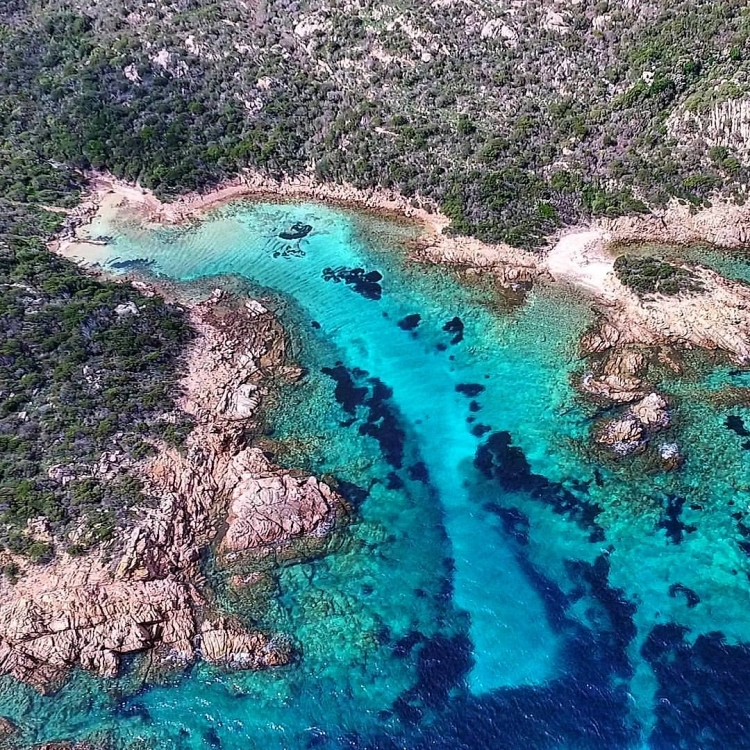
Discovering the island of Spargi: an unspoilt paradise in the Maddalena archipelago
If you’re looking for a unique place to immerse yourself in wild, unspoilt nature, the island of Spargi is a destination not to be missed. Situated in the La Maddalena archipelago, this small granite island is a true jewel of the Mediterranean, famous for its beaches of soft, white sand, turquoise waters and the legends associated with its breathtaking landscapes. In this article, I’ll guide you through the wonders of Spargi: what to see, where to go and why it’s one of the most precious gems of the La Maddalena Archipelago National Park.
Why visit Spargi Island
The island of Spargi is the third-largest island of the archipelago and stretches for approximately four square kilometres. Completely uninhabited, is a place where nature reigns supreme. Here you will find a an inland area rich in typical vegetation, with junipers, mastic trees and rockroses, and a unique coastline, characterised by sand dunes and crystal-clear coves.
But Spargi isn’t just about nature: its history is marked by tales of sailors, sunken wrecks and military fortifications that have left an indelible mark on the island.
Things to see and do on the island of Spargi
The most beautiful beaches
Cala Corsara
Among the sandy coves One of the most famous is undoubtedly Cala Corsara.
This beach, surrounded by granite boulders sculpted by the wind, it offers a picture-postcard view.
- Curiosities: The rocks at Cala have distinctive shapes, such as the “witch” and the “dog”, which have inspired local legends and stories that have been passed down through the centuries.
Cala Granara
Another beach not to be missed is Cala Granara, less crowded but just as charming.
Here is the white sand blends in with the greenery, creating a unique contrast.
Cala Soraya
It takes its name from Queen of Persia Soraya is one of the most romantic spots on the island.
Its beauty has been praised by many visitors for its peaceful atmosphere and crystal-clear waters.
The story of the Spargi wreck
Discovered in 1939 by the renowned archaeologist Nino Lamboglia, the wreck of Spargi is a Roman cargo ship dating from 2nd century BC.. It carried amphorae of wine and other goods, and its cargo is on display at the museum La Maddalena Naval Base.
This discovery demonstrates the island’s importance along the Mediterranean trade routes.
The charm of the Secca Corsara
La Secca Corsara It is an underwater rock formation near the island, perfect for diving.
His backdrops host major underwater attractions, such as gorgonians and granite walls, making it a true a diving paradise for diving enthusiasts.
Excursions into the countryside
L’hinterland of Spargi is a treasure trove waiting to be explored. The little ones watercourses The paths running through the area are lined with typical vegetation, including strawberry trees. As you climb the hills, you’ll reach peaks overlooking the sea from where you can admire breathtaking views of the archipelago and take in all the characteristic scents of the Mediterranean scrub.
The local wildlife
Rare species of birds nest on the island, such as the Corsican seagull and the Crested cormorant, symbols of the National Park’s biodiversity. These birds find refuge amongst the rocks and in the quietest coves.
Military fortifications
Don’t miss a visit to Talmone Military Battery, one of the fortifications dating back to the late 19th and early 20th centuries. This site tells the story of Sardinia’s coastal defences and offers spectacular views of the island and the surrounding sea.
Boat Excursions
The only way to reach the island is by sea, departing from Palau or La Maddalena.
Many excursions include stops at Cala Corsara, Cala Granara and other lesser-known coves. You can also travel by boat on the Motonave Petagus.
Snorkelling and diving
The seabed around the island is a real sight to behold. In addition to wreck of the Spargi, the inlets and the surrounding shoals offer the chance to admire gorgonians, schools of fish and the turquoise sea with its shimmering hues.
Cavaliere Beach
Not far from Spargi, on the’the island of Budelli, you will find the famous Knight's Beach.
This enchanting place is surrounded by sand dunes and pristine waters, and is often included in tours of the islands in the archipelago.
Photos and videos: capturing the island’s beauty
Spargi is the perfect place for photography enthusiasts.
Take photos of the crested cormorant and the storm petrel, and every corner of the island, from sand gullies with its hidden coves, it provides the perfect backdrop for unique photos. Don’t forget to bring a camera to capture your snorkelling adventures or a day spent among the sandy coves, making everything “Instagram-worthy’“!
FAQ: Frequently Asked Questions about Spargi Island
1. How do you get to Spargi Island?
You can only reach Spargi by boat. Book a boat tours to view Spargi
2. What are the most beautiful beaches in Spargi?
The beaches not to be missed are Cala Corsara, Cala Granara e Cala Soraya, famous for their turquoise waters and soft white sand; if you enjoy snorkelling, you’ll find shallow waters, but if you prefer diving, in some places the water reaches depths of up to 35 metres.
3. Are there any excursions into the countryside?
Yes, the website offers routes through the countryside, ideal for hikers keen to explore the Mediterranean vegetation and take in some truly unique views.
4. What is the story behind the Spargi wreck?
It is a Roman ship discovered in 1939, which was carrying amphorae of wine and oil, but that’s not all: it also contained foodstuffs, precious jewellery and pottery shards. The artefacts are on display at the Naval Museum in La Maddalena, which you can visit during your exploratory trip.
5. What can I do on the island?
You can go snorkelling, diving, on boat trips, birdwatching or simply relax on the unspoilt beaches.
6. Is Spargi suitable for children?
Yes, but it’s important to bring everything you need with you, as the area is uninhabited and lacks facilities or services such as public toilets and changing rooms, or the option to hire sun loungers and parasols.
7. Which animal species can be seen?
If you’re lucky, you’ll be able to spot some of the area’s most fascinating birds, such as the Corsican seagull, the crested cormorant and other endemic species that nest in the most secluded coves and breed during the mating season.
8. How long does it take to visit Spargi?
A day is enough to explore the gems of the archipelago and its main coves, and to enjoy the natural surroundings.
9. Where to stay in Spargi?
The island is uninhabited. You can stay overnight in La Maddalena or Palau.
10. What are the rules for visiting Spargi?
Visit this area, covered in cistus, juniper and mastic trees, which stretches all the way to the sea, with its typical and endemic Mediterranean habitat. Please remember that it is important to respect the National Park’s rules: do not collect sand or shells, do not light fires and do not disturb the wildlife.